
Forest City 1 is often presented as a housing and growth proposal. But its own material also raises major questions about water infrastructure, the proposed Great Bradley Reservoir and the future of the Upper Stour landscape. In this guest essay, David Rowland reflects on walking part of the Stour Valley Trail and considers what could be lost if the river ecosystem is treated primarily as future infrastructure.
Forest City or Lake City?
FC1 is not a proposal for a ‘Forest City’ so much as it is a proposal for a ‘Lake City’, like the popular tourist destination and Hollywood filming site of Ouarzazate (Lake City) in Morocco. And like Ouarzazate, the economic benefits would be counterbalanced by the impact on the respective river ecosystem: that of the Stourhead and upper Stour Valley.
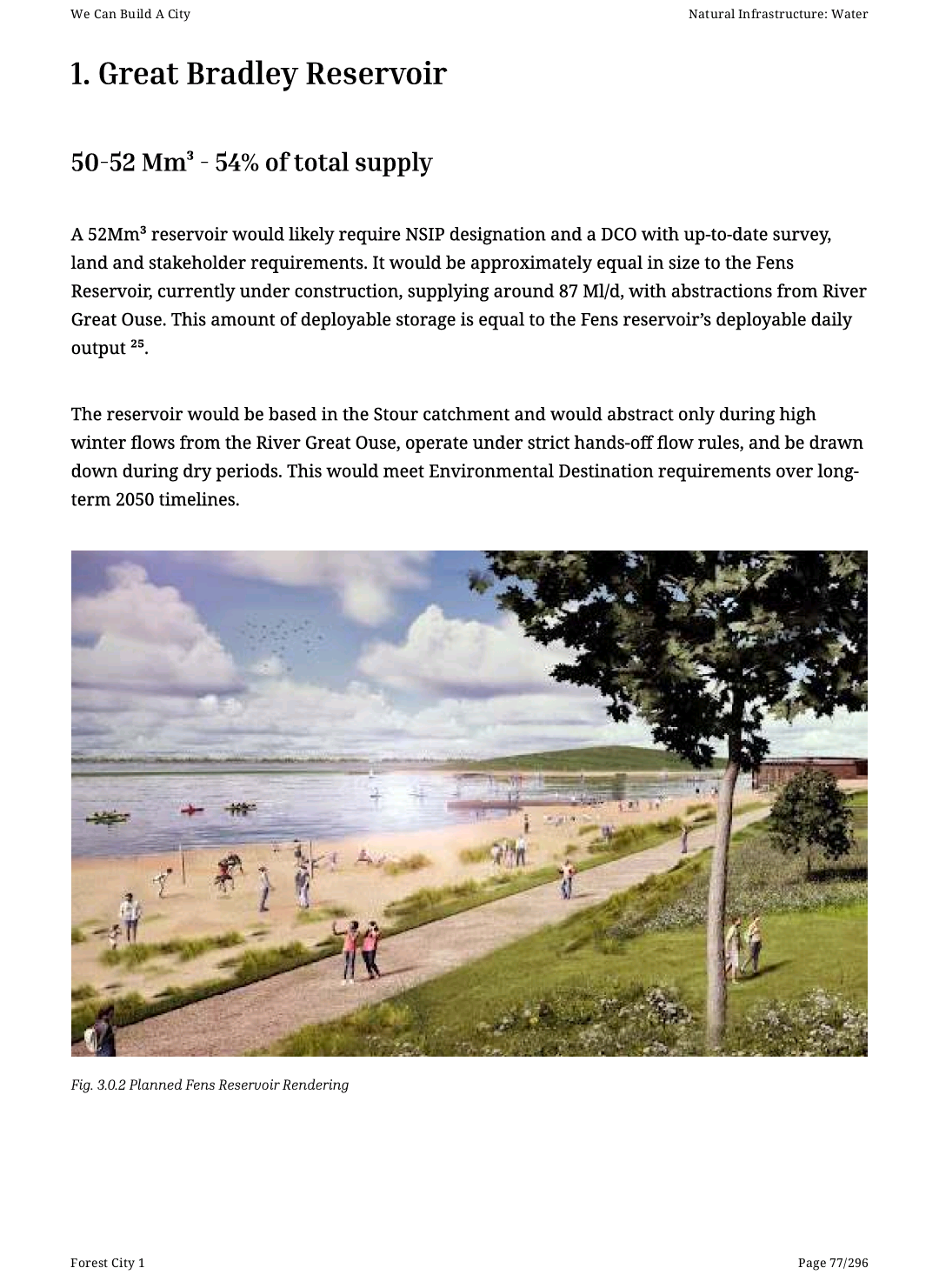
Looking at their scheme map, their urban centre would be adjacent to a vast reservoir, the Great Bradley Reservoir. In their We Can Build A City section 3 report on Blue Infrastructure, they revive a 1960s scheme to flood or displace villages by filling a ‘large-scale reservoir (1,600 acres) near Great Bradley’, to support at least half of the water demand of their new city the size of Birmingham bordering this new reservoir on its east side.
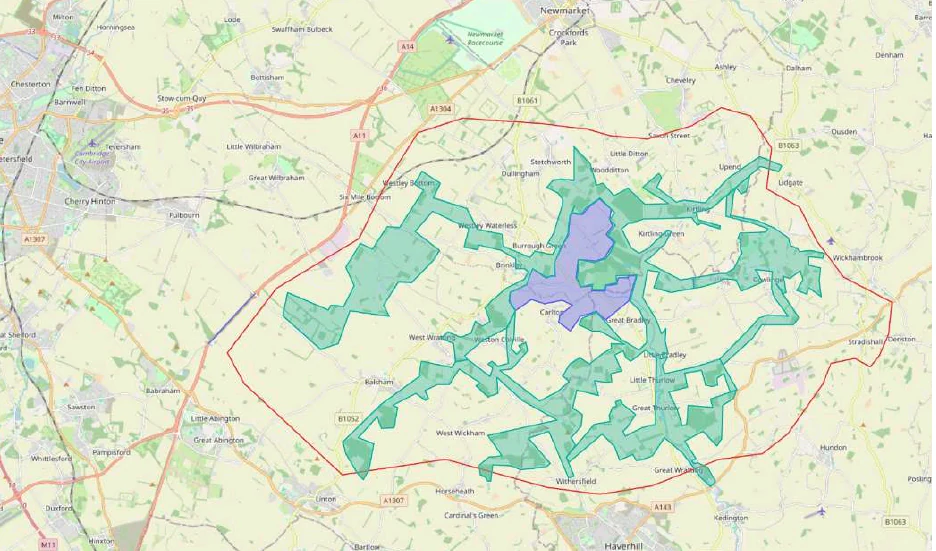
This proposal was ultimately rejected in the 1990s in favour of a water transfer arrangement due to local opposition, but similar schemes have taken place before. Indeed, for Birmingham, the poet Shelley’s house in the Elan Valley was flooded to make a reservoir to supply the new city, and this house is occasionally seen when severe droughts diminish this reservoir.
But as various anti-FC1 flyers along the Stour Valley Path seemed to indicate, including one by the Stourhead Benefice church in Great Bradley itself, the concerns of these villages are already being articulated under a petition organised by the West Suffolk MP Nick Timothy. My concern was with an affected party that could neither organise against the proposal nor even be made aware of it: the Stourhead’s natural ecosystem.
All the flora and fauna that might be impacted in order to make way for greater ‘biodiversity net gain’ in the proposed matrices of woodland that would surround the urban area(s) and reservoir, with many fields and conservation areas “tree-bombed” to interconnect disparate wooded areas.
Walking the Stour Valley Path
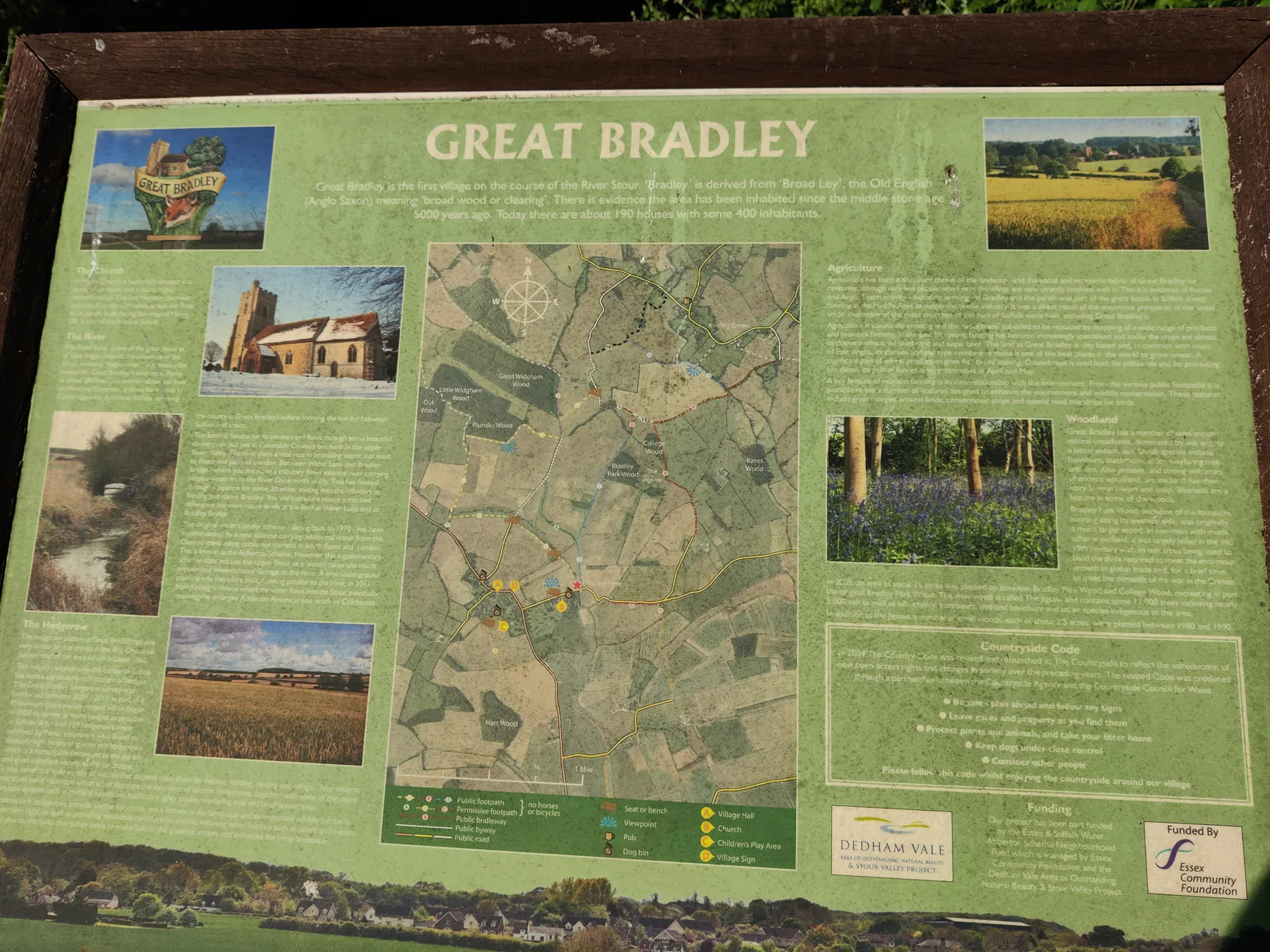
To see what might be lost, I decided to get the X13 bus from Cambridge to Haverhill to hike the Stour Valley Path up to Newmarket, a route signposted and waymarked with the symbol of a dragonfly. As the bus entered Haverhill bus station, it brushed aside the languid boughs of a willow tree, sure enough indicating the flow of the Stour Brook along the bus station.
Crossing certain fields along the way, clusters of black-winged dragonflies would rise up out of the tall grass to cross my path, by far the most numerous of the insects I observed, so the choice of the dragonfly as the symbol for the Stour Valley Path seemed apt: there were a few different types of dragonfly and damselfly I happened upon along the way, as well as the odd stray bee, feline, fox, deer, bird of prey, shoals of fish and a great many horses, including Shetland ponies and show-horses in private enclosures flanking the public trail.
A quiet river with little protection
In his book Is a River Alive?, Cambridge don Prof. MacFarlane imagines the history of the River Cam and traces the etymology of its headwaters at Nine Wells as deriving from the Roman goddess of fate ‘Nona’. Dubious as this interpretation is (the headwaters do indeed have several springs and may simply have had nine at the time of naming), his efforts to get readers to empathise with rivers through their personification/deification is understandable.
The Stour River has been much celebrated by artists, fishermen, hikers and politicians, who’ve sought to make a living off the river for commerce, pastimes or inspiration. Even now, West Suffolk’s Tory MP seems to be galvanising opposition to FC1 with plastic-pouched pamphlets around the upper Stour Valley, though I saw no one along the trail itself despite walking for hours along (mostly) well-defined paths.
However, the upper Stour Valley is not ‘Constable Country’, it lacks the recognition and the protection of the downstream Dedham Vale Area of Outstanding Natural Beauty near the mouth of the river. Indeed, the headwaters here have no name like ‘Nine Wells’ (Cam) or ‘Caesar’s Spring’ (Ravensbourne). Very few make their way to the headwaters of this river, simply because there is little to see of any note.
A river that can be stepped over
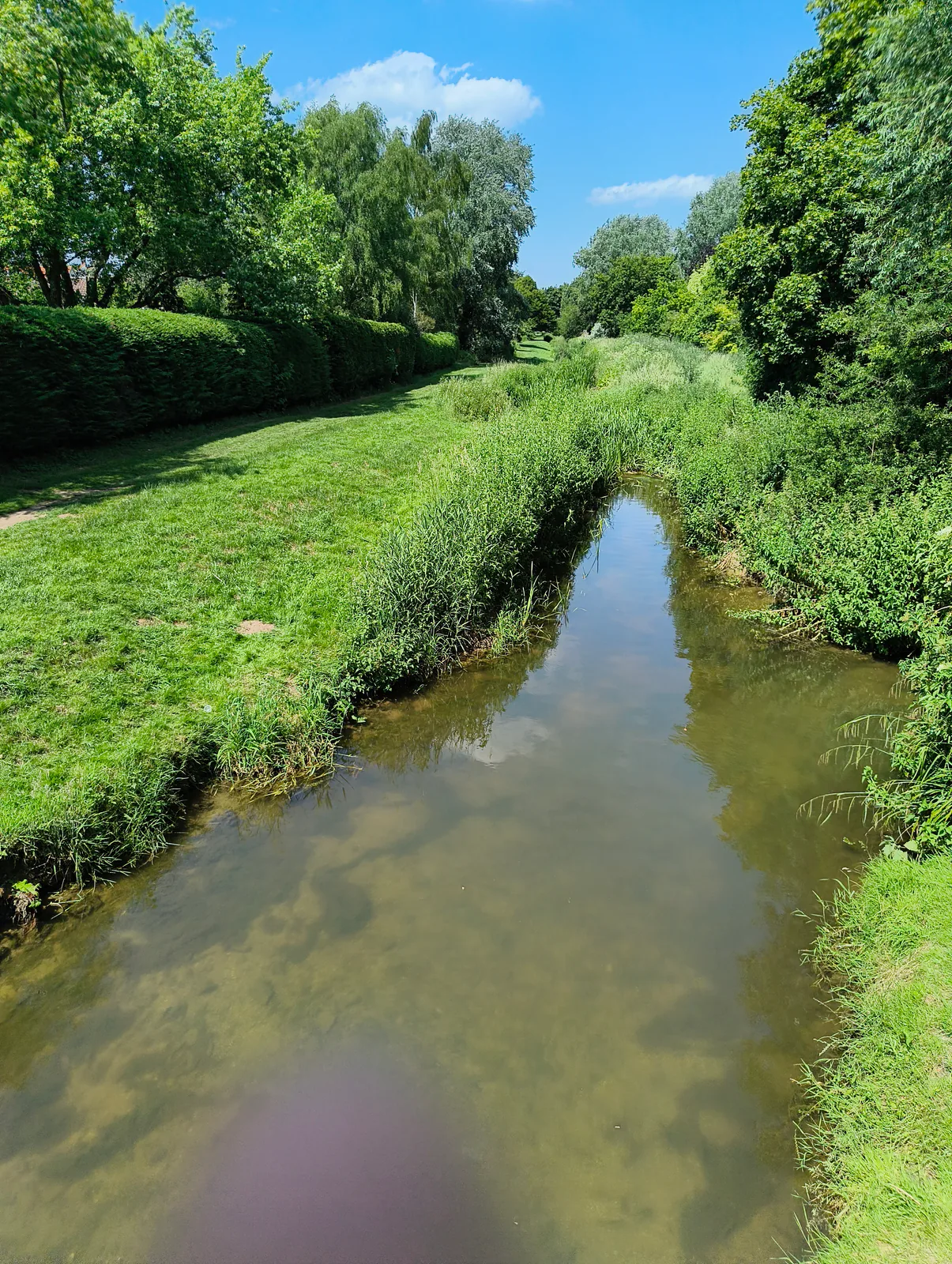
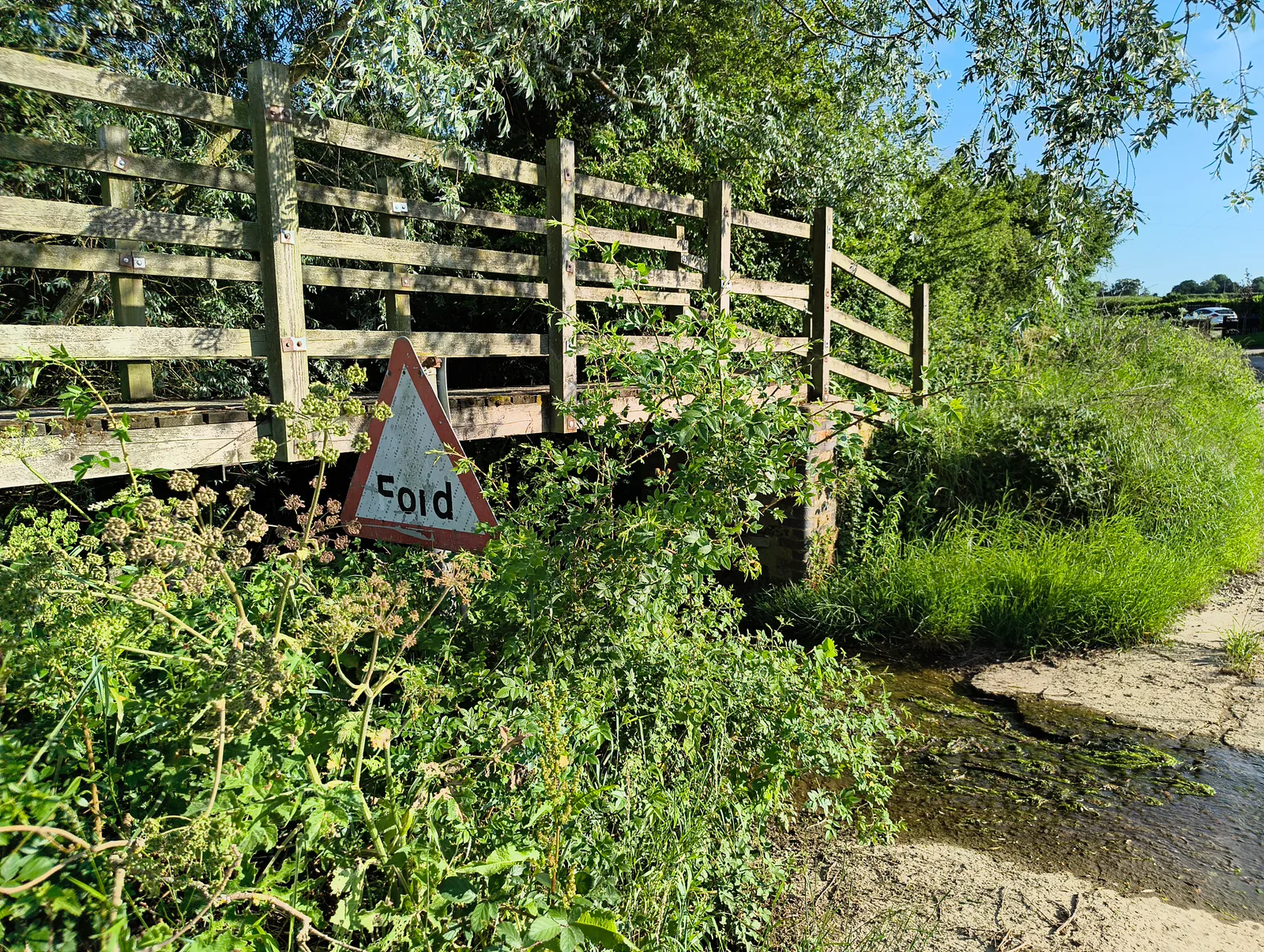
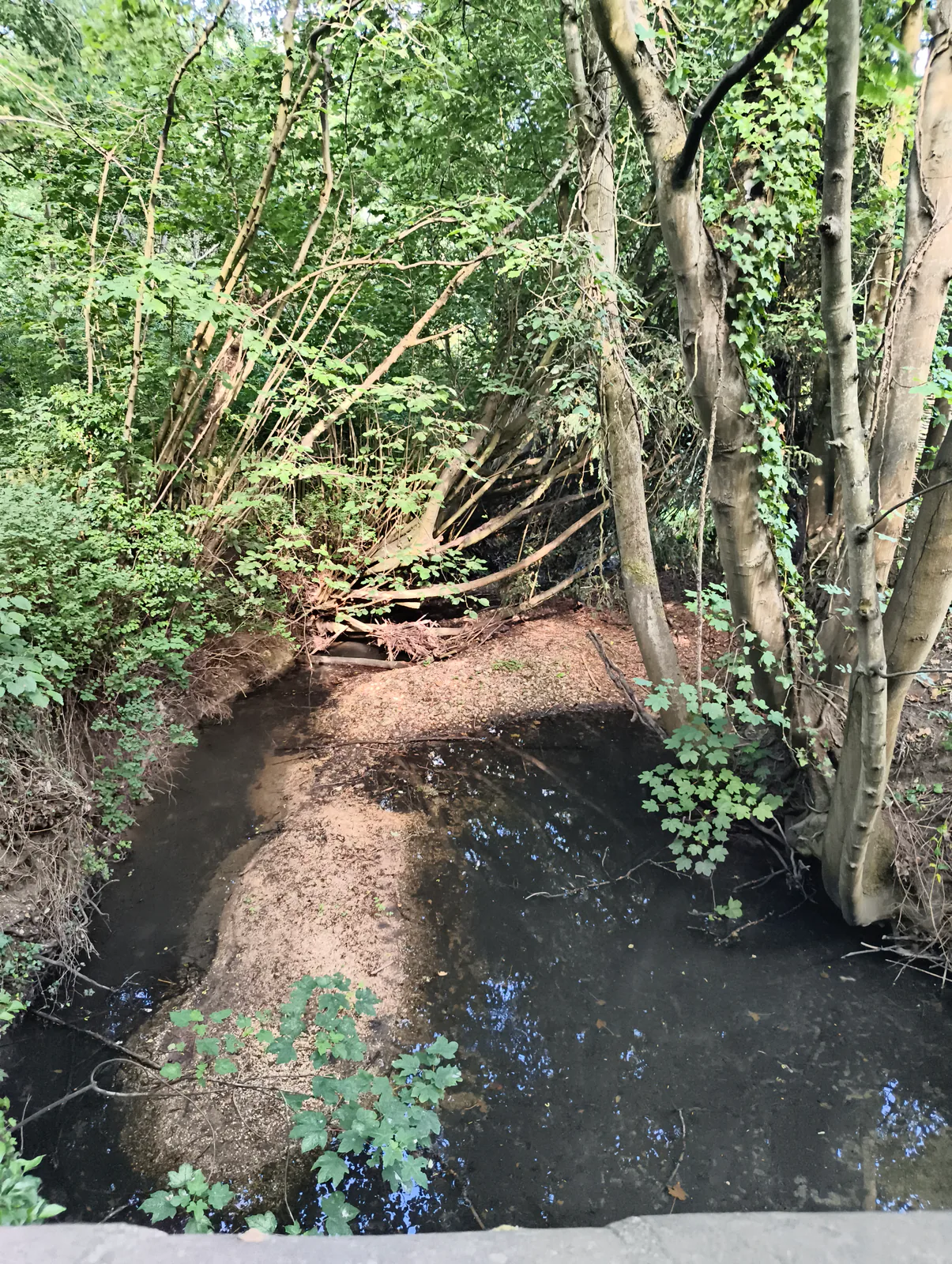
And indeed, though the name ‘Stour’ means ‘fierce’ or ‘strong’, there are neither legends nor myths surrounding the river, and it seems in the Upper Stour Valley to flow gently, meekly, with river fords along the way that can in the summertime literally be stepped over.
Indeed, even for those sections of the upper Stour Valley Path that followed along the banks of the river, the river couldn’t be heard or seen through the serried ranks of trees which protectively enclosed it from view, standing sentinel beside the gentle stream.
Yet these same trees allowed the river’s course to be discerned when the upper Stour Valley Path would diverge from the banks of the river through fields or along hillsides.
What would the reservoir change?
Little wonder, then, that Report 3 on Blue Infrastructure suggests that it would take many years to actually fill this new reservoir, giving local residents plenty of time to evacuate and move their belongings out to their new homes. The river is just a stream at their proposed site. It is neither wide nor deep, riving a gentle depression along fields, hedges and woodland.
So the river ford I stepped over would go from a silent cascade to a trickle; and downstream, the river would go from being a stream to becoming a rill. The vast trees which line the river banks would survive; however, the arable land and grasslands beyond these thirsty trees might struggle in the summers, especially given FC1’s plans for woodland corridors of fast-growing trees to be accommodated across the valley.
These immediate impacts of filling the reservoir would be devastating for local residents and could be devastating for farmers in the Stourhead natural ecosystem as well as for those which comprise this natural ecosystem.
The longer-term risk
The long-term impacts could be worse. These temperate, riverine British Isles are about as far from Saharan Morocco as can be, so the fate of the river Draa which is dammed/damned by the reservoir at Ouarzazate Lake City would not be replicated here: we would not see the parching of agricultural land downstream as is occurring with the Draa’s oases of date trees downstream of their Lake City; we would not see the increasing salinity of groundwater salting the earth, making it harder to abstract fresh drinking water; we would not see the river itself dry out a hundred miles away from the mouth of the river, to never in our lifetimes meet the sea (excepting the possibility of mass coastal desalination and water transfer to restore the river, which seems unlikely to be a high priority for Morocco’s government).
Nevertheless, with average temperatures set to increase in the long-term here in England, there would be long-term deleterious consequences for the ecosystem.
Could there be a better alternative?
P.S. There is a need for greater housing supply, and those proposing or advocating for FC1’s Lake City are doubtless motivated by a desire to improve this situation, hence the radical, provocative scale of their Lake City, flooding of villages and tree-bombing of high-grade arable land and conservation areas.
Nevertheless, as they themselves recognise in the ‘Other Schemes’ section of their report, there is already a regional scheme proposed as a joint project by the Hill Group & Urban&Civic for a new city that is both more modest, more sustainable, and better connected (just outside Cambridge’s Green Belt, already on the Cambridge-Newmarket rail line, with an extant rail station, a stream and proximity to the major trunk roads enclosing the Green Belt).
Though that scheme (‘Westley Green’) wasn’t approved, having been formally proposed just weeks before COVID-19 became a global pandemic, the new Cambridge Growth Company has development corporation powers extended over much of their original site plan, which may lead to a review and revival of the original plan.
Rather than a new Ouarzazate Lake City in the middle of West Suffolk, we could have a new Bath (i.e. a city of tens of thousands on the outskirts of a larger city, yet independent, successful and tourist-y) on the South Cambridgeshire/East Cambridgeshire border, yet just several miles from Newmarket. And just as Bath and Bristol have an amalgamated Green Belt (the river Avon Green Belt), this could lead to an extended Cambridge Green Belt which should cover the Stourhead Benefice, protecting it from FC1-style overdevelopment.
The importance of local approval
Though as a city, the bland name ‘Westley Green’ could be replaced with something meaningful, like ‘Augusta’ (of which there are already many cities thus named) or ‘Augusta’s Piece’, to recognise the history of the poet Lord Byron’s family in the area. Byron’s half-sister Augusta lived there at Swynford Manor, and his daughter Augusta Ada Lovelace is widely celebrated for having invented the algorithm as a tool for automatic computational programming, with the annual Lovelace Medal having been awarded to such giants of computation as Tim Berners-Lee, Karen Sparck-Jones and Demis Hassabis.
New cities should not just pay lip service to local history or figures like John Milton and Maynard Keynes, though as with Milton Keynes, such naming can be purposeful. But in order to build a city, approval needs to begin locally, with proof that development and future growth will be sustainable.
The FC1 proposal fails on this count, and thus the Stourhead Benefice seems to be speaking also for the Stourhead ecosystem in rejecting it. We can build a city. They just can’t build this one.
About the author
David Rowland lives in Cambridgeshire. He writes from a personal interest in rivers, landscapes and the wider debate around river rights, inspired in part by Robert Macfarlane’s Is a River Alive?
Editor’s note
This article is published as a guest essay. The views expressed are the author’s own. Minor typographical corrections and formatting changes have been made for readability.
Stop Forest City welcomes thoughtful contributions from residents, walkers, landowners, campaigners, environmental groups and anyone with a connection to the landscapes affected by the Forest City 1 proposal. If you would like to share a personal view, local knowledge, photographs or a guest article, please contact us at contact@stopforestcity.co.uk.
 Stop Forest City